How to Pass Your Driving Test First Time (UK Guide)
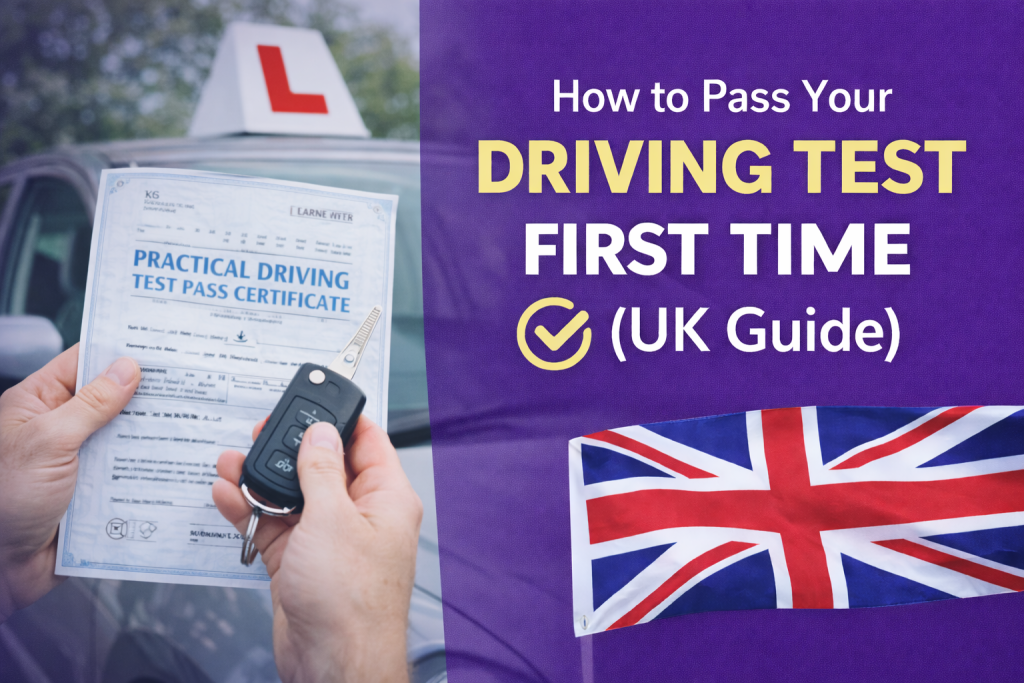
How to Pass Your Driving Test First Time (UK Guide)
Passing your driving test first time isn’t about luck. It comes down to preparation, consistency, and understanding exactly what the examiner is looking for.
If you know what matters — and avoid the common mistakes — you massively increase your chances of passing.
Here’s how to do it properly.
1. Understand What the Test Is Actually Assessing
Your driving test isn’t about being perfect. It’s about being:
- Safe
- Controlled
- Aware of what’s happening around you
Examiners aren’t trying to catch you out. They want to see that you can drive independently without putting yourself or others at risk.
If you can do that consistently, you pass.
2. Get Enough Practice (Don’t Rush It)
The DVSA recommends around 45 hours of lessons plus private practice.
Some people need less. Many need more.
The problem is:
👉 people rush their test before they’re ready
You should be at the point where:
- You can drive without constant help
- You rarely make serious mistakes
- You can deal with new situations calmly
If you still rely heavily on your instructor, you’re not test-ready yet.
3. Master the Basics (This Is Where Most People Fail)
Most test failures aren’t because of complicated driving.
They’re because of basic things done badly.
Focus on:
Observation
- Mirrors before changing speed or direction
- Checking junctions properly
- Looking ahead, not just in front of the car
Positioning
- Staying centred in your lane
- Correct positioning at junctions
- Not drifting when steering
Speed control
- Not driving too fast OR too slow
- Adjusting for conditions
- Approaching hazards smoothly
Get these right and you’re already ahead of most learners.
4. Learn From Common Test Fails
The most common reasons people fail include:
- Not checking mirrors properly
- Poor observation at junctions
- Incorrect positioning when turning
- Failing to respond to road signs or markings
- Lack of control when moving off
None of these are advanced skills.
They’re habits.
Fix the habits, you fix the result.
5. Stay Calm — Even If You Make a Mistake
A lot of people fail because they panic after a small mistake.
Here’s the truth:
👉 You can make minor mistakes and still pass
What matters is how you respond.
If something goes wrong:
- Stay calm
- Keep driving safely
- Don’t assume you’ve failed
One mistake doesn’t end your test. Losing control does.
6. Get Comfortable Driving Independently
Part of your test is independent driving.
That means:
- Following sat nav directions
- Or following road signs
You won’t be guided step-by-step.
You need to:
- Listen properly
- Plan ahead
- Make your own decisions
If you go the wrong way but do it safely, that’s fine.
7. Practice in Real Test Conditions
Don’t just drive casually.
Practice like it’s the real test:
- Drive in busy areas
- Practice different times of day
- Work on roundabouts, junctions, and manoeuvres
If you only drive in easy conditions, the test will feel harder than it should.
8. Know Your Manoeuvres Properly
You’ll be asked to perform one manoeuvre.
This could be:
- Parallel park
- Bay park
- Pull up on the right
You don’t need to rush it.
Take your time, stay controlled, and keep checking your surroundings.
Observation is more important than perfection.
9. Be Ready Before You Book
Don’t book your test just because you “feel like you should”.
Book it when:
- Your instructor says you’re ready
- You’re driving consistently well
- You’re confident, not guessing
Booking too early is one of the biggest reasons people fail.
10. Treat It Like a Normal Drive
On the day of your test:
- Don’t overthink everything
- Don’t try to drive “perfectly”
- Just drive how you’ve been trained
Examiners can tell when someone is overthinking and forcing it.
Relaxed, controlled driving passes tests.
Final Thoughts
Passing first time is completely achievable.
It’s not about being the best driver on the road.
It’s about being a safe, consistent one.
Focus on:
- Strong basics
- Good habits
- Staying calm under pressure
Do that, and you give yourself the best chance of walking away with a pass.
Looking for a driving instructor near you?
Find local instructors and filter by automatic or manual lessons: