How to Get the Most Value From Each Driving Lesson
Driving lessons can be a significant investment, so it’s important to make sure you’re getting real value from every session. Progress doesn’t just depend on the instructor — what you do before, during, and after each lesson matters just as much.
Here’s how to make every lesson count.
1. Turn Up Prepared (Not Cold)
The first 10–15 minutes of a lesson are often wasted if you arrive unfocused or unsure what you’re working on.
Before your lesson:
- Think about what you struggled with last time
- Make a mental note of questions you want to ask
- Be ready to drive as soon as the lesson starts
A prepared learner progresses faster.
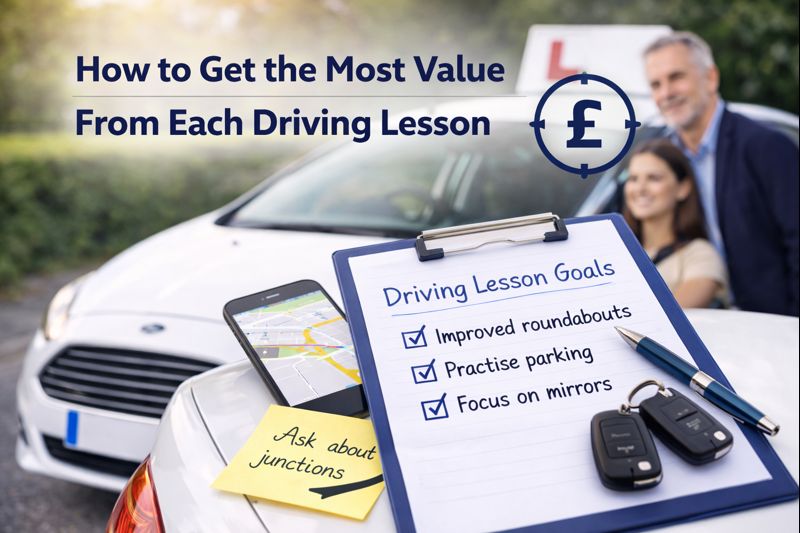
2. Have a Clear Goal for Each Lesson
Good lessons have a purpose.
That could be:
- Improving junction observations
- Working on roundabouts
- Refining manoeuvres
- Building confidence at higher speeds
If you’re unsure, ask your instructor:
“What should we focus on today?”
Clear goals = measurable progress.
3. Ask Questions (That’s What Lessons Are For)
There’s no such thing as a stupid question when learning to drive.
If something doesn’t make sense:
- Ask why, not just how
- Ask for explanations in different ways
- Ask to repeat something if needed
Understanding why you do something makes it easier to remember and apply later.
4. Don’t Rely on the Instructor Too Much
As lessons progress, you should be doing more of the thinking.
This means:
- Planning ahead independently
- Reading road signs without prompts
- Making decisions without constant guidance
Instructors will support you — but independence and skill is what gets you test-ready.
5. Practise Between Lessons (If You Can)
Private practice is one of the biggest factors in faster progress.
If you have access to a suitable car:
- Practise the basics regularly
- Reinforce what you learned in lessons
- Build confidence in quieter areas
Even short practice sessions can make a big difference.
6. Accept Mistakes and Learn From Them
Mistakes are part of learning.
What matters is:
- Understanding what went wrong
- Knowing how to fix it next time
- Not repeating the same mistake due to panic
A lesson where you make mistakes can still be a very productive lesson.
7. Be Honest About Nerves or Concerns
If you’re feeling anxious, distracted, or overwhelmed, say so.
Instructors can:
- Slow things down
- Break tasks into steps
- Adjust lesson structure
Driving lessons work best when communication is open.
8. Review the Lesson Afterwards
After each lesson, take a minute to reflect:
- What went well?
- What needs more work?
- What should you practise or focus on next time?
This simple habit reinforces learning and builds confidence.
Progress Over Perfection
Getting value from driving lessons isn’t about rushing or being flawless. It’s about:
- Consistent improvement
- Building understanding
- Developing safe habits
Learners who stay engaged, prepared, and proactive get more from every lesson — and often need fewer overall.
