How Many Driving Lessons Do You Really Need to Pass?
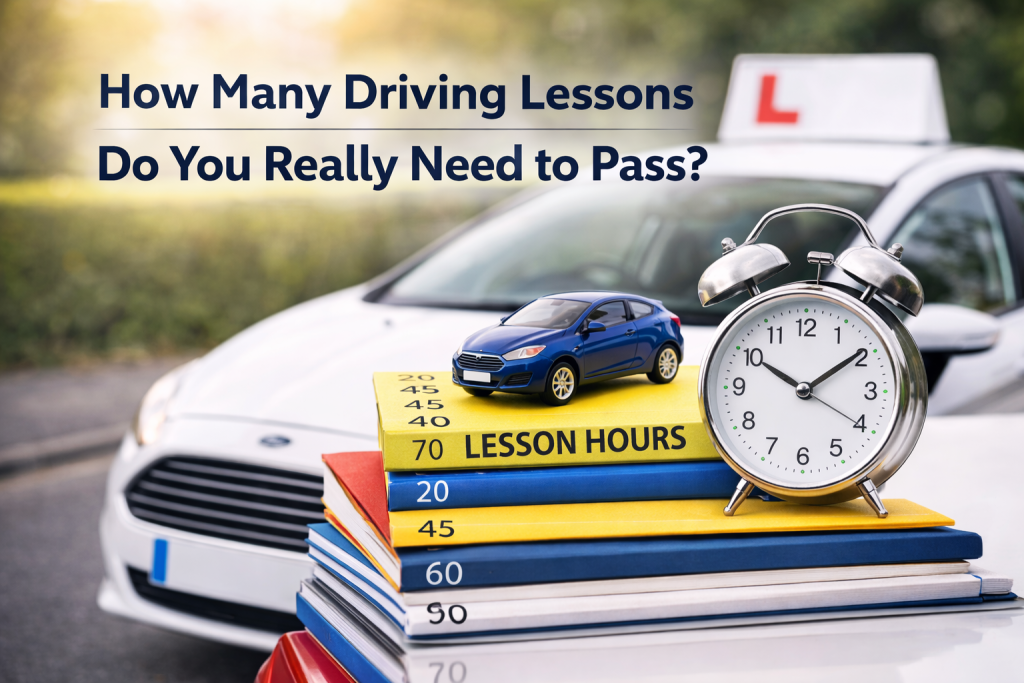
Here’s a clean, realistic post that manages expectations properly and won’t come back to bite you later.
How Many Driving Lessons Do You Really Need to Pass?
One of the most common questions learner drivers ask is:
“How many hours will it take me to pass?”
The honest answer is: it depends — but there are useful averages that help set expectations.
The DVSA Average (UK)
According to the DVSA, the average learner needs:
- 45 hours of professional driving lessons
- Plus around 20 hours of private practice
That puts most learners at roughly 60–70 hours of driving experience before passing.
This is an average — not a requirement and not a guarantee.
Why Some Learners Need More (or Less)
Several factors affect how quickly someone learns to drive.
1. Confidence and nerves
Learners who struggle with anxiety often need more time — not because they can’t drive, but because confidence takes longer to build.
2. Manual vs automatic
- Manual learners may need more lessons due to clutch control, gear changes, and stalling.
- Automatic learners typically progress faster, especially early on.
That doesn’t mean automatic is “easier” — just simpler mechanically.
3. Practice outside lessons
Learners who get regular private practice:
- Progress faster
- Retain skills better
- Need fewer paid lessons overall
Lack of private practice usually increases lesson hours.
4. Lesson frequency
- 1 lesson every 2–3 weeks = slower progress
- 1–2 lessons per week = steady progress
Long gaps between lessons often mean relearning skills each time.
5. Previous driving experience
Some learners already have experience:
- Mopeds or motorbikes
- Farm vehicles
- Driving abroad (legally)
These learners may need fewer hours — but still must meet UK test standards.
Intensive Courses: Are They Faster?
Intensive or “crash” courses can work for some learners, but they’re not a shortcut for everyone.
They work best if:
- You already have basic driving ability
- You can handle pressure
- You have no long gaps between sessions
They don’t magically reduce the amount of learning required — they just compress it.
Red Flags to Watch For
Be cautious if anyone promises:
- “Pass in 10 hours”
- “Guaranteed first-time pass”
- “No need for private practice”
Everyone learns at a different pace. Honest instructors will tell you that.
The Real Goal Isn’t Just Passing
Passing the test is important — but the real goal is being able to:
- Drive safely on your own
- Handle unfamiliar roads
- Make good decisions under pressure
Learning properly may take longer, but it builds confidence and safer habits for life.
So, How Many Hours Will You Need?
As a rough guide:
- Fast learners: 30–40 hours
- Average learners: 45–60 hours
- Learners who need more time: 60+ hours
There’s no shame in any of these.
Progress matters more than speed.
